
Why Contact Forms Are Becoming Obsolete
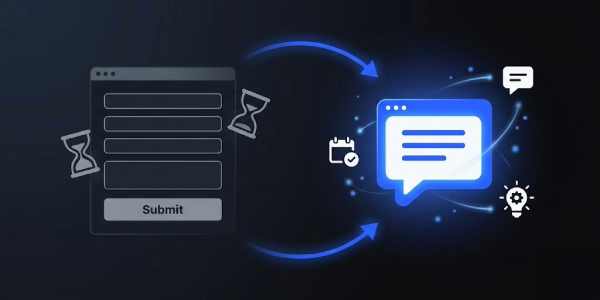
Why contact forms are becoming obsolete
The contact form was a reasonable solution in 2005. You couldn't chat in real time. You couldn't book online. Email was still the dominant channel. So you put a form on your website, someone filled it in, and you got back to them within a day or two.
It made sense then. It doesn't make sense now.
The problem with forms today
Here's what actually happens when a visitor fills in a contact form on a typical business website. They type out their enquiry, hit submit, see a "thank you" message, and then wait. Maybe they get an auto-response email. Maybe not.
Meanwhile, the enquiry sits in a shared inbox. Someone picks it up hours later — or the next morning. By that point, the potential customer has already contacted two competitors.
Contact forms create delay by design. In a world where customers expect instant responses, delay is the same as rejection.
What customers are doing instead
People would rather send a WhatsApp message than fill in a form. They'd rather chat with an AI assistant than submit a ticket. They want an answer now, not a promise that someone will be in touch.
This isn't a generational preference. It's a universal one. Even older customers, when given the choice between a form and an instant answer, choose the instant answer every time.
The conversion gap contact forms create
Every contact form on your website is a conversion gap — a moment where a ready-to-buy visitor has to slow down, type out a message, and wait on your schedule.
Studies consistently show that responding to a web enquiry within five minutes increases the chance of converting that lead by over 400% compared to responding within an hour. Most businesses respond in hours. Some respond the next day.
A contact form makes fast follow-up structurally impossible unless someone is monitoring the inbox constantly.
What replaces it
The businesses replacing contact forms are seeing measurable results:
- AI assistants that answer questions instantly and capture contact details in the conversation
- Embedded booking flows that let visitors schedule a call or appointment in under 60 seconds
- WhatsApp integration that moves the conversation to the channel customers already prefer
- Automated follow-up sequences that respond the moment an enquiry is captured
None of this requires a human to be sitting at a desk watching an inbox.
The form isn't the problem — the process is
To be clear: capturing information from visitors is still important. The problem is using a passive, asynchronous form as your primary tool for doing it.
The shift is from "fill in this form and wait" to "tell me what you need right now and I'll help you immediately." That shift alone changes how visitors experience your business — and how many of them become customers.
See how NextGen Intelligence replaces contact forms with intelligent engagement.
Request your free demo concept →
We'll show you a concept built specifically for your business and industry.
Upgrade Your Business to NextGen Intelligence
.svg)


.svg)

.webp)
